Why Is Truck Shipping Essential for Modern Logistics?

Truck shipping plays a vital role in modern logistics. It is often the backbone of supply chains. Many businesses rely on trucks for timely delivery. These vehicles help transport goods across vast distances efficiently.

In urban areas, truck shipping is often the most practical option. It navigates city roads and reaches destinations that larger vehicles cannot. Moreover, trucks can adapt to various cargo types, from food to machinery. This flexibility is essential in today's diverse market.

However, challenges persist. Traffic congestion can delay shipments. Routes may become less reliable due to construction or accidents. Companies must often reflect on their logistics strategies. Despite these hurdles, truck shipping remains a cornerstone of effective distribution systems.

Why Is Truck Shipping Essential for Modern Logistics?

The Role of Truck Shipping in the Supply Chain Ecosystem

Truck shipping plays a critical role in the modern supply chain ecosystem. It accounts for approximately 72% of all freight movement in the United States, according to the American Trucking Associations. This statistic underscores the importance of trucks in transporting goods quickly and efficiently. With e-commerce on the rise, reliable truck shipping services are essential for timely deliveries.

Transportation delays can lead to significant financial losses. A report from the Council of Supply Chain Management Professionals highlights that inefficiencies can cost businesses up to 25% of their revenues. Trucks provide flexible routes and can reach remote areas that other modes of transportation cannot. This flexibility is crucial for meeting consumer demand and staying competitive.

Tips: Optimize routes using real-time data to save time and costs. Regular maintenance of trucks can prevent breakdowns and ensure reliability. Investing in technology can streamline operations and improve decision-making. Reflect on the challenges; are your current strategies aligned with market demands? Consistent evaluation is key to success in logistics.

Why Is Truck Shipping Essential for Modern Logistics? - The Role of Truck Shipping in the Supply Chain Ecosystem

Dimension Description Impact on Logistics
Speed Ability to quickly deliver goods to various locations. Reduces lead time and increases customer satisfaction.
Flexibility Capability to adapt routes and schedules based on demand. Enhances service delivery options for clients.
Cost-Effectiveness Lower transportation costs compared to other modes. Enables competitive pricing for businesses.
Accessibility Ability to reach remote or rural areas. Expands market reach for businesses.
Cargo Variety Transporting various types of goods including perishable items. Facilitates diverse supply chain solutions.
Technology Integration Use of tracking and logistics software. Improves transparency and efficiency in operations.

Impact of Trucking on Global Trade and Economic Growth

Why Is Truck Shipping Essential for Modern Logistics?

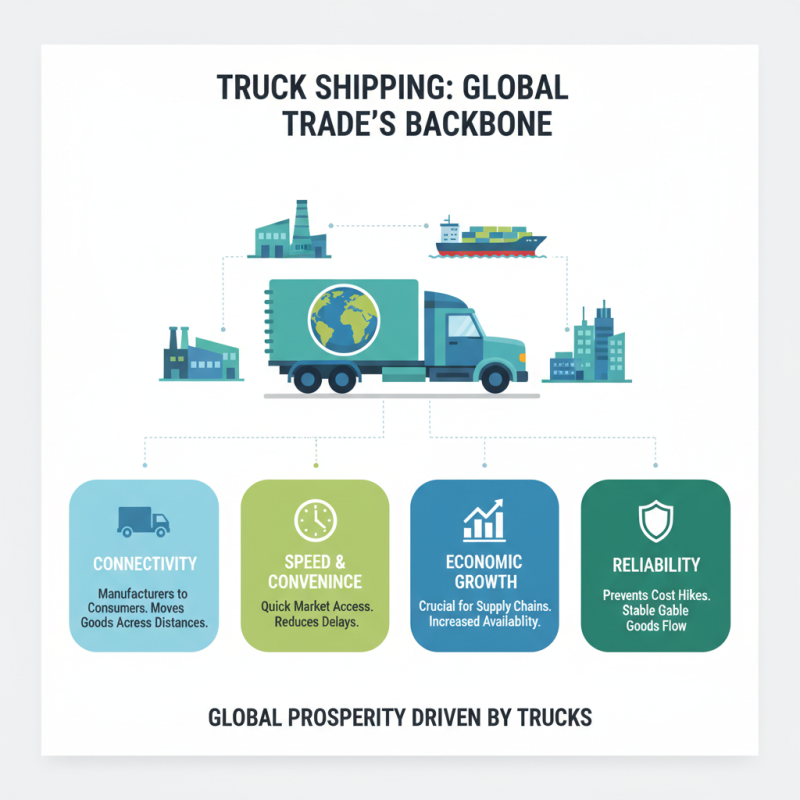
Truck shipping is a backbone of global trade. It moves goods across vast distances, connecting manufacturers to consumers. The convenience of trucks ensures that products reach markets quickly. This plays a crucial role in economic growth. Without reliable trucking, supply chains could face delays. This can lead to increased costs and reduced availability of goods.

The trucking industry employs millions of people. It supports jobs in various sectors, from logistics to retail. However, the industry faces challenges. Driver shortages, traffic congestion, and regulatory hurdles complicate operations. These issues can slow down delivery times. Businesses must adapt to ensure smooth transportation. The impact of trucking goes beyond logistics; it alters local economies. When goods are delivered promptly, communities thrive. Businesses can flourish, leading to a healthier economy.

Trucking’s importance cannot be overstated. It facilitates global trade and supports everyday life. Yet, improvements are necessary. Finding sustainable practices will be key. The road ahead is uncertain, but innovation may pave the way. The need for effective solutions remains constant in this evolving landscape.

Key Statistics Highlighting Trucking’s Contribution to Freight Transport

Trucking plays a pivotal role in modern logistics. About 70% of freight transported in the U.S. relies on trucks. This statistic alone highlights the importance of trucking in the supply chain. Trucks cover vast distances, ensuring goods reach their destinations on time. They connect producers to consumers, facilitating trade.

Here are some tips for optimizing your trucking logistics. Ensure your routes are efficient. Use GPS technology to track shipments. Evaluate delivery schedules regularly to reduce delays. Small improvements can lead to significant savings. A single late delivery can disrupt the entire supply chain.

The trucking industry also faces challenges. Driver shortages and rising fuel costs affect operation. Finding qualified drivers can be tough. However, investing in training can yield long-term benefits. Consider flexible schedules to attract talent. Balancing cost and efficiency remains a constant struggle. Reflect on your logistics strategies regularly to find better solutions.

Truck Shipping Contribution to Freight Transport

This chart illustrates the significant contribution of truck shipping in the freight transport industry. The data highlights the percentage share of different modes of freight transport in 2022.

Efficiency and Flexibility: Advantages of Truck Shipping Over Other Modes

Why Is Truck Shipping Essential for Modern Logistics?

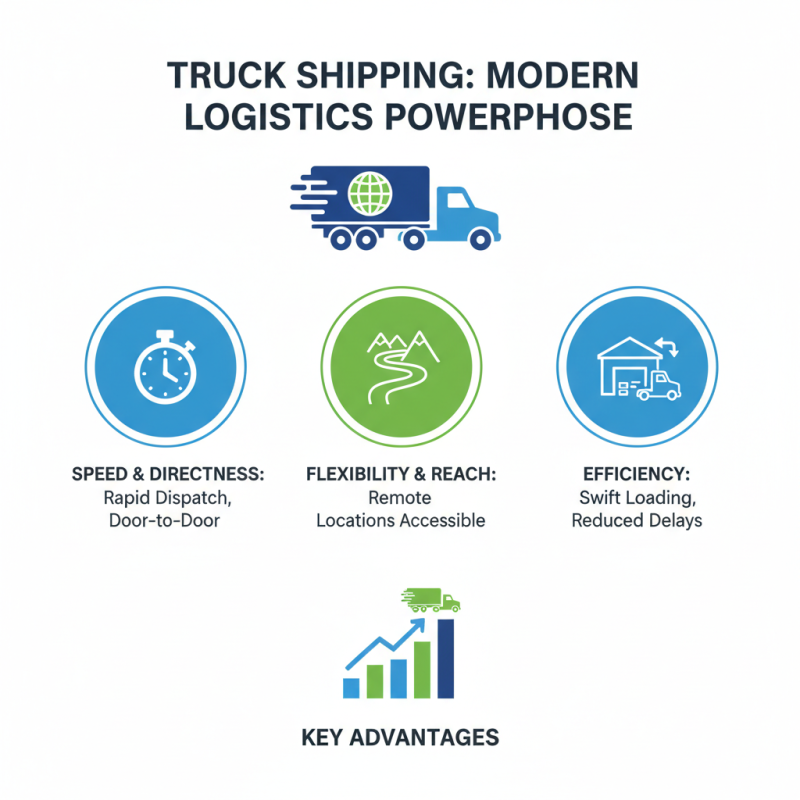
Truck shipping plays a crucial role in modern logistics. Its efficiency and flexibility set it apart from other transportation modes. With trucks, goods can be dispatched quickly and directly, reaching remote locations that rail or sea transport often cannot access. A nearby distribution center can load shipments swiftly, reducing delays.

Moreover, trucks can adapt to various load sizes. Whether it's a small parcel or a large shipment, trucks can handle them efficiently. This versatility ensures that businesses can meet customer demands promptly. However, managing schedules can pose challenges. Traffic and weather conditions can impact delivery times unexpectedly.

Despite its benefits, dependency on truck shipping can lead to congestion. Urban areas may struggle with increased road traffic. This raises questions about sustainability and environmental impact. Businesses need to reflect on the balance between rapid delivery and responsible logistics. Finding that balance remains a work in progress.

Challenges and Innovations in the Trucking Industry for Modern Logistics

Truck shipping plays a pivotal role in modern logistics. However, the industry faces various challenges. A report from the American Trucking Associations reveals that the sector employs around 3.5 million truck drivers in the U.S. A shortage of drivers is imminent, with a projected gap of 160,000 drivers by 2030. This shortage could disrupt supply chains.

Innovation is crucial in addressing these challenges. Many companies are exploring technology for efficiency. Automated vehicles and route optimization software can improve delivery times. According to a recent study, implementing such technologies can reduce transportation costs by up to 30%. Yet, the transition to automation raises questions about safety and workforce displacement.

Fuel prices continue to fluctuate, impacting operating costs. In 2022, average diesel prices soared by 75% compared to 2020. This hike has forced companies to rethink their logistics strategies. Sustainability is also a growing concern. Many enterprises are now exploring alternative fuels. Despite these efforts, the path to a greener trucking industry is fraught with obstacles. Achieving a balance between cost, efficiency, and environmental responsibility remains tenuous.