2026 How to Optimize Truck Shipping for Efficient Logistics Solutions?
In the fast-paced world of logistics, optimizing truck shipping is crucial. Industry expert Joe McCarthy once stated, "Efficient truck shipping is the backbone of reliable logistics." His insight highlights the importance of careful planning in transportation.
Many businesses struggle with truck shipping logistics. Delays and inefficiencies can lead to increased costs and unhappy customers. Every shipment counts. It’s essential to minimize downtime and ensure timely deliveries.
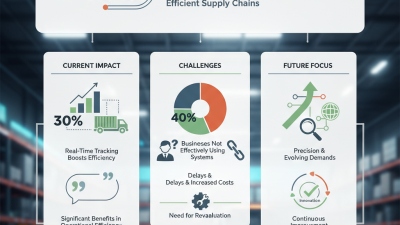
Investing in technology can improve this process. Real-time tracking and route optimization software can make a significant difference. However, not every company embraces new methods. Reflecting on internal processes is vital. Acknowledging areas for improvement can lead to enhanced truck shipping strategies.
Key Factors Influencing Truck Shipping Efficiency in Logistics
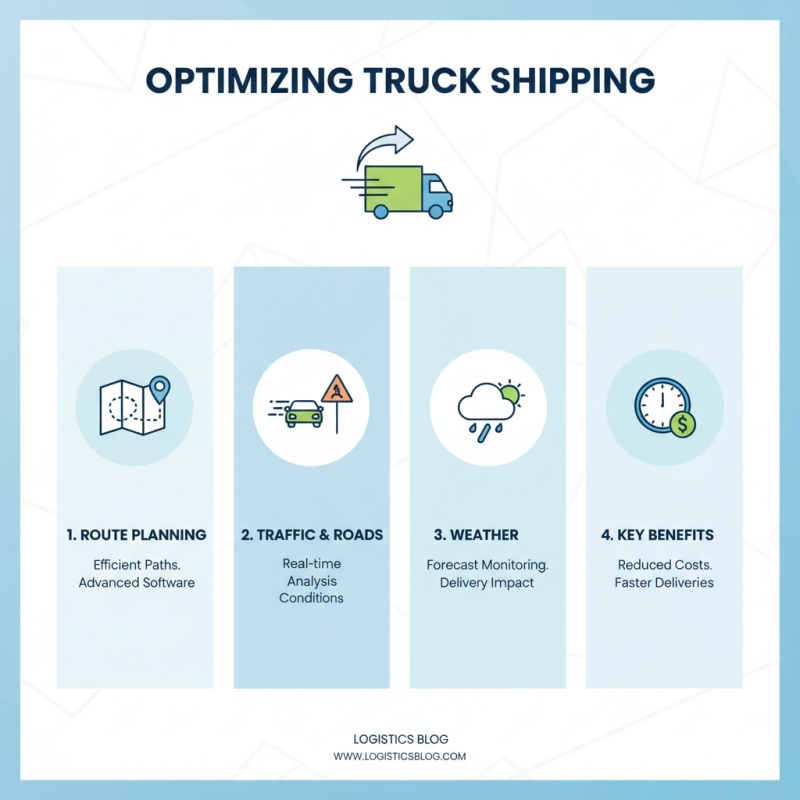
In optimizing truck shipping for logistics, several key factors play a crucial role. Route planning is essential. Utilizing advanced software can help in determining the most efficient paths. Traffic patterns and road conditions should be analyzed regularly. Weather can also impact delivery times and should never be overlooked.
Another significant factor is load optimization. Ensuring trucks are maximally loaded reduces the number of trips required. This not only saves fuel but also minimizes costs. Training drivers on best practices for load securing can prevent damages. Additionally, underload situations should be avoided. It often leads to wasted resources.
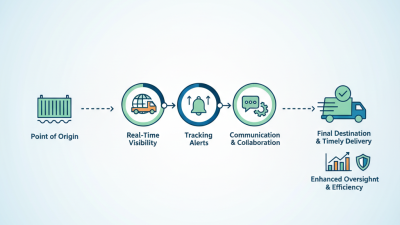
Communication can significantly influence efficiency. Real-time updates on shipment status help in proactive decision-making. Delays must be communicated swiftly to all stakeholders involved. However, technology can sometimes fail, causing miscommunication. Relying solely on systems may not always be feasible. Building strong relationships with drivers and clients can compensate for any tech mishaps.
Technological Innovations Enhancing Truck Shipping Processes
Technological innovations are transforming truck shipping processes. Advanced software systems streamline route planning and delivery tracking. Real-time data helps logistics managers make better decisions. These tools improve efficiency but require constant updates and employee training.
Incorporating automation in warehouses saves time. Automated loading and unloading reduce labor costs and minimize human error. Yet, relying on technology can lead to vulnerabilities. System failures or cyber threats can halt operations. Companies must be prepared for such challenges.
Electric and hybrid trucks are gaining traction. They promise lower emissions and reduced fuel costs. However, infrastructure for charging still needs improvement. The high initial costs might deter some businesses from making the switch. Balancing innovation and practicality is essential for future growth.
2026 Truck Shipping Efficiency Metrics
Strategies for Route Optimization in Truck Transportation
Route optimization is crucial for efficient truck transportation. By analyzing traffic patterns, logistics companies can minimize delays. Using advanced algorithms, they can identify the fastest routes. Real-time data helps address unforeseen issues. However, relying solely on technology can lead to oversights. Human judgment remains vital in logistics management.
Driver feedback is essential for refining routes. They can provide insights that algorithms might miss. Understanding truck capacity and weight limits is important too. Overloading a truck can cause inefficiencies. GPS tools offer guidance, but they might not always account for road conditions.
Investing in training for drivers can improve route efficiency. They should be aware of their surroundings. Regular maintenance of vehicles can also prevent breakdowns. Yet, many organizations overlook this aspect, focusing too much on software solutions. Balancing technology and human input is key to optimizing truck shipping.
2026 How to Optimize Truck Shipping for Efficient Logistics Solutions? - Strategies for Route Optimization in Truck Transportation
| Route |
Distance (miles) |
Estimated Time (hours) |
Fuel Efficiency (mpg) |
Cost ($) |
| Route A |
250 |
4 |
8 |
300 |
| Route B |
180 |
3 |
9 |
250 |
| Route C |
300 |
5 |
7 |
400 |
| Route D |
220 |
4.5 |
8.5 |
320 |
Best Practices for Managing Truck Fleet and Resources
Managing a truck fleet can be challenging. Efficient resource allocation is key to optimizing logistics. Data shows that proper fleet management can reduce shipping costs by up to 15%. Monitoring usage patterns is essential for this. Regularly reviewing mileage and maintenance schedules improves vehicle lifespan.
Tip: Utilize telematics. Real-time data provides insights into driver habits and vehicle health. This technology can prevent costly repairs and enhance safety. According to industry research, fleets using telematics see a 20% boost in efficiency.
Consider driver training programs to promote safe driving. Well-trained drivers reduce fuel consumption. They also lower accident rates. Reports indicate that efficient driving techniques can cut fuel costs by around 10%. Remember, every small improvement counts towards overall logistics efficiency.
Environmental Considerations in Truck Shipping Optimization
Truck shipping is a critical component of logistics, but it also poses significant
environmental challenges. In 2020, the freight transportation sector was responsible
for nearly 29% of total
greenhouse gas emissions in the United States, according to the Environmental
Protection Agency (EPA). Optimizing truck shipping involves not only improving
efficiency but also addressing these emissions.
Reducing fuel consumption is one way to
enhance sustainability. Implementing better route planning and load optimization can
cut down on empty miles and excessive fuel use. Reports show that optimizing routes
can save up to 10% in fuel costs. This approach
leads to lower emissions while improving delivery efficiency.
Tips: Use technology.
GPS systems can optimize routes for minimal fuel usage.
Vehicle maintenance is another area needing attention. Regularly servicing trucks
can ensure they run efficiently. A well-maintained truck can improve fuel economy
by up to 15%. Moreover, exploring
eco-friendly alternatives, such as electric trucks, can reduce a fleet's carbon
footprint significantly. However, access to charging infrastructure remains a
challenge, highlighting the need for continued investment.
Tips: Schedule regular
maintenance checks. This prevents excess emissions and improves reliability.
While there's promise in these strategies, challenges persist. Stakeholders must
balance cost-effectiveness with environmental responsibility. Not every logistics
company prioritizes sustainability. The need for collaboration
in the industry cannot be overstated, as shared goals can lead to swift
advancements in eco-friendly logistics.