How to Optimize Your Shipment and Shipping Process Globally?
In today's global marketplace, optimizing your shipment shipping process is essential. According to a recent report by the International Chamber of Commerce, global trade is expected to grow by 3.8% annually. This increase emphasizes the need for efficient shipping to meet rising demand. Businesses must adapt to this trend to stay competitive.
Inefficiencies in shipment shipping can lead to significant costs. The Logistics Management report indicates that poor shipping practices can waste up to 30% of operational budgets. Furthermore, companies that streamline their shipping processes see an average return on investment of 10-20% within the first year. Implementing technology and strategies is vital for reducing these costs.
There are challenges to address, such as fluctuating shipping rates and delays. Companies must rethink their approaches, focusing on data-driven decisions. Regularly assessing logistics providers can ensure better performance. Inadequate systems can leave businesses vulnerable, unable to meet customer expectations. Optimizing shipment shipping is not just an advantage; it is a necessity for long-term success.

Understanding Global Shipping Requirements and Regulations
Global shipping is a complex landscape, shaped by various regulations. Each country has unique requirements that can impact your shipping process. Customs duties, taxes, and documentation need careful attention. An incomplete shipment may lead to delays and fines, affecting your business reputation.
Understanding the specific regulations of the destination country is crucial. For instance, some countries require specific labeling or packaging materials. Failure to comply can result in goods being returned or destroyed. Shipping restrictions on certain items can be confusing. Researching these aspects thoroughly can save time and costs.
It's essential to stay updated with changes in regulations. These changes can be frequent and may vary by region. Failure to adapt can cause significant disruptions. Engaging with logistics experts can provide valuable insights. However, not all advice will apply universally. You might find conflicting information, requiring careful evaluation. Adjusting your strategies based on real experience is vital.
How to Optimize Your Shipment and Shipping Process Globally? - Understanding Global Shipping Requirements and Regulations
| Country/Region |
Shipping Method |
Average Delivery Time |
Customs Requirements |
Cost Estimate ($) |
| United States |
Air Freight |
2-5 days |
Commercial Invoice, Packing List |
150 |
| Germany |
Sea Freight |
10-14 days |
EORI Number, Customs Declaration |
200 |
| China |
Express Shipping |
3-7 days |
Commercial Invoice, Export License |
100 |
| Brazil |
Air Freight |
4-8 days |
Import License, Customs Clearance |
250 |
| Australia |
Courier Service |
5-10 days |
Customs Declaration, Biosecurity Import Conditions |
180 |
Implementing Technology for Efficient Shipment Tracking and Management
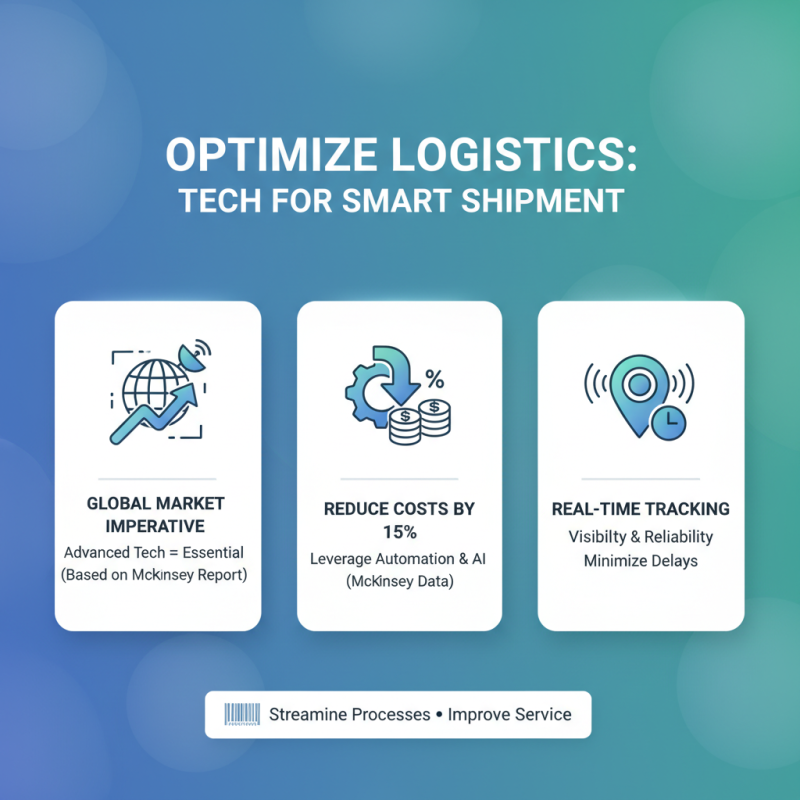
Implementing technology for efficient shipment tracking and management is imperative in today’s global market. According to a report by McKinsey, companies that leverage advanced technology can reduce logistics costs by up to 15%. Integrating automation and AI-driven solutions allows businesses to streamline their processes significantly. For instance, real-time tracking systems provide visibility throughout the shipping journey, reducing delays and improving service reliability.
However, challenges remain in achieving full integration. Not all companies are equipped with the necessary infrastructure to implement these technologies. Moreover, data security concerns can hinder adoption. A recent survey indicated that 40% of logistics firms worry about data breaches linked to shipment tracking systems. Addressing data integrity and maintaining trust in technology is crucial. Companies must invest in secure platforms to reassure clients.
Even with advanced solutions, human oversight is essential. While automation improves efficiency, it can also lead to over-reliance. Some businesses might overlook critical human insights when analyzing shipment patterns. Striking a balance between technology and human expertise can foster better decision-making. As logistics continue to evolve, it's essential to reflect on these dynamics for sustained growth.
Strategies for Reducing Shipping Costs and Maximizing Value
To reduce shipping costs and maximize value, focusing on efficient strategies is crucial. One effective method is optimizing your packaging. Using the right size and weight helps minimize shipping fees and can prevent damage during transit. Consider lightweight materials that offer protection without adding bulk. A well-designed package can also enhance the unboxing experience for customers.
Tips: Regularly review your shipping options. Compare carriers and rates to find the best deals based on your specific needs. Negotiate bulk rates with carriers whenever possible. This can lead to significant savings and ensure that you receive competitive pricing.
Another strategy is leveraging technology. Utilize tracking software to enhance visibility in the shipping process. This can help you identify delays and address issues before they escalate. Additionally, automate inventory management. This reduces the chances of overstocking or stockouts, which can lead to costly shipping mistakes.
Tips: Train your team regularly on best practices. A knowledgeable team can make informed decisions that benefit your shipping process. Encourage continuous feedback on shipping procedures to find areas for improvement.
Enhancing Customer Experience Through Streamlined Shipping Processes
Streamlining shipping processes is essential for enhancing customer experience. Customers expect quick and reliable delivery. Meeting these expectations requires an efficient system. Clear communication is vital. Sending real-time updates helps customers feel informed about their shipments. This simple action can build trust and loyalty.
Another focus should be on simplifying the checkout process. A complex system can frustrate customers. They may abandon their cart if they feel overwhelmed. Offering multiple shipping options can cater to different needs. Some customers prioritize speed, while others may prefer cost-effectiveness. Balancing these options can lead to higher satisfaction.
Evaluating current procedures often reveals areas for improvement. Analyze shipping times and costs regularly. Are shipments arriving late? Do fees deter customers? Feedback from customers can identify pain points. Addressing these concerns can foster a more positive shopping experience. Continuous adjustments in strategy are necessary to adapt to changing consumer behavior. These reflections can drive long-term success.
Global Shipping Process Optimization: Delivery Time by Region