10 Essential Tips for Effective Truck Shipping Tracking in 2026?
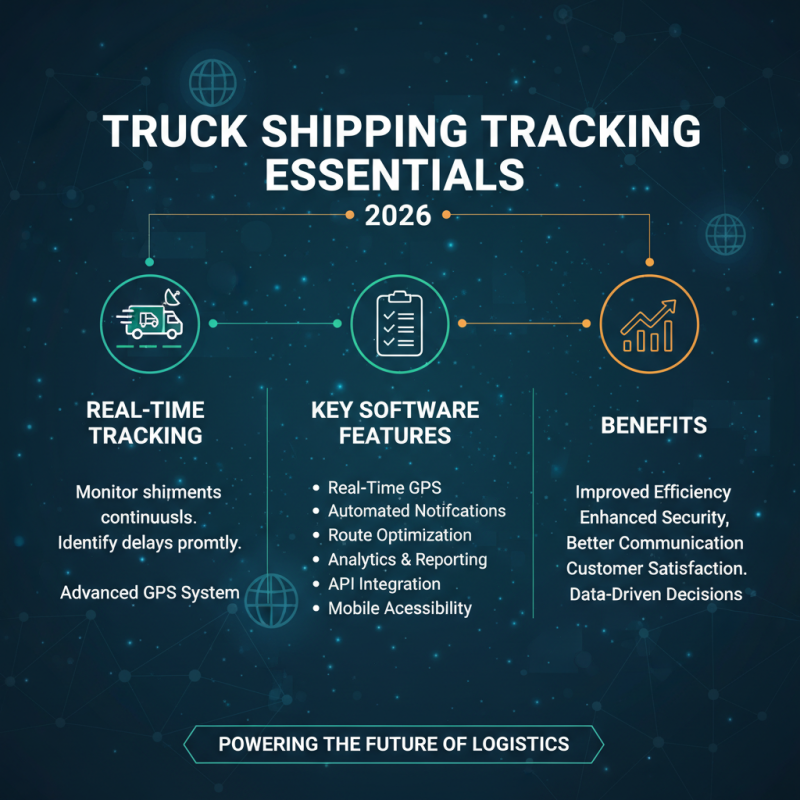
In 2026, efficient truck shipping tracking is more crucial than ever. With a growing number of shipments, logistics depend on real-time data. Companies that harness technology will gain an edge. However, many still struggle with effective tracking methods.
Truck shipping tracking involves various aspects, from GPS technology to software solutions. But it’s not just about tracking; it’s about understanding the entire shipping process. Can your system provide updates seamlessly? Are your drivers equipped to communicate effectively? These questions matter.
While many tools exist, not all are user-friendly. Some apps require training, leading to frustration. Businesses often overlook this aspect. Tracking should simplify logistics, not complicate them. Reflecting on your current methods may reveal areas for improvement. The future of truck shipping tracking lies in adaptability and user-focused solutions.
Understanding the Importance of Truck Shipping Tracking in 2026
In 2026, effective truck shipping tracking has become vital.
Businesses rely on real-time data to stay competitive.
Customers expect timely updates on their shipments. An efficient tracking system minimizes delays and enhances satisfaction.
Transparency breeds trust between carriers and clients. Red flags can be spotted more quickly.
However, implementing tracking systems can be challenging.
Many companies face issues with integration.
Data silos often hinder communication between teams.
Small businesses might lack the resources for advanced technologies.
This gap can lead to mistakes.
Missing updates can frustrate customers and damage reputations.
The key lies in addressing these obstacles.
Investing in user-friendly platforms is essential.
Training for the team ensures everyone can operate the system.
Regular feedback from clients can highlight areas for improvement.
A proactive approach can turn tracking into a competitive advantage in the evolving shipping landscape.
Key Technologies Shaping Truck Shipping Tracking Systems
In 2026, truck shipping tracking is increasingly defined by advanced technologies. Real-time GPS tracking enhances visibility. According to a recent industry report, 75% of logistics providers now use this technology to monitor shipments. However, challenges remain in interoperability among systems. Different platforms often fail to communicate seamlessly.
IoT devices are another game-changer. These sensors collect data on vehicle performance and cargo conditions. They improve safety and efficiency in shipping operations. A study found that IoT can reduce shipping delays by 20%. Yet, data overload can be an issue. Companies struggle to analyze vast amounts of information effectively.
Blockchain technology is emerging as a solution for transparency. It provides an immutable record of transactions. This can prevent fraud and ensure accountability. However, adoption in the trucking industry is slow. Many companies find it hard to change existing systems. Addressing these hurdles is crucial for growth. As technology evolves, continuous adaptation will determine success in truck shipping tracking.
10 Essential Tips for Effective Truck Shipping Tracking in 2026
| Tip No. |
Tip |
Description |
Key Technology |
| 1 |
Use Real-Time GPS Tracking |
Implement GPS devices for accurate location updates. |
GPS Technology |
| 2 |
Integrate IoT Sensors |
Utilize IoT sensors to monitor truck conditions. |
IoT Technology |
| 3 |
Leverage Cloud-Based Solutions |
Store and access tracking data via the cloud. |
Cloud Computing |
| 4 |
Implement Mobile Tracking Apps |
Provide clients with mobile access to tracking information. |
Mobile App Development |
| 5 |
Utilize Blockchain for Security |
Enhance data security and transparency with blockchain. |
Blockchain Technology |
| 6 |
Use Predictive Analytics |
Anticipate delays and issues through data analysis. |
Predictive Analytics |
| 7 |
Establish Automated Alerts |
Set up notifications for status updates and changes. |
Automation Tools |
| 8 |
Enhance Customer Communication |
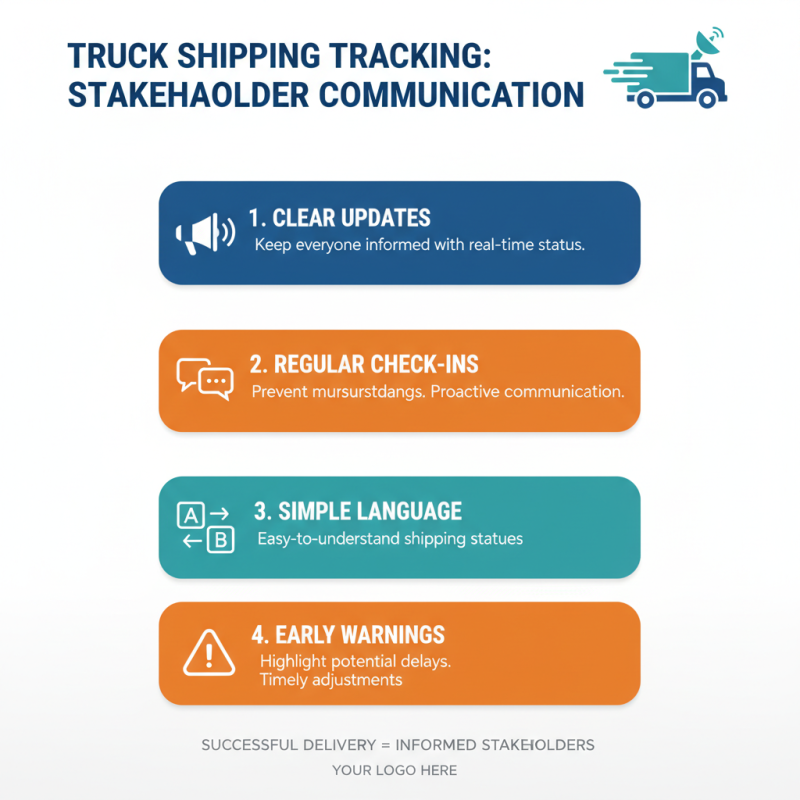
Regularly inform clients about shipment status. |
Communication Platforms |
| 9 |
Monitor Environmental Conditions |
Track temperature and humidity for sensitive loads. |
Environmental Sensors |
| 10 |
Optimize Route Planning |
Use software to find the most efficient routes. |
Routing Software |
Best Practices for Ensuring Accurate Data and Updates
In 2026, effective truck shipping tracking relies heavily on accurate data and timely updates. A recent industry report indicates that 80% of logistics professionals consider real-time tracking essential for improving efficiency. Ensuring accurate data begins with selecting the right technology. Poor data can lead to delays and increased costs. Many companies still rely on outdated tracking systems, which can result in lost shipments and unhappy customers.
Regularly updating tracking information is crucial. Implement automated systems to send real-time alerts. This small change can improve communication with clients. Use GPS and RFID technologies to enhance accuracy. Reports show that firms using these tools can reduce shipping errors by up to 30%. Address data discrepancies quickly. Mistakes in tracking can spiral into larger problems if not resolved promptly.
Training staff on data management is vital. Employees need to understand how to interpret tracking information correctly. Many workers feel unprepared for this task. Consider regular workshops to enhance their skills. Transparency during the shipping process can build trust with customers. A significant percentage of consumers expect updates on their orders. With these practices, businesses can mitigate risks while enhancing their shipping operations.