How to Choose the Best Truck Shipping Solutions for Your Business?
Choosing the right truck shipping solutions is vital for business success. Efficient logistics impact costs and customer satisfaction. Do you have specific cargo needs? Considerations vary widely.
A reliable truck shipping service can enhance your supply chain. Different providers offer various options, such as full truckload or less-than-truckload shipping. It’s important to assess each choice based on your unique requirements. Researching affordability, speed, and service reliability is crucial.
Not all solutions fit every business. Challenges can arise, like delays or damages during transit. Evaluating potential risks is essential. Seeking input from experienced professionals can guide your decision. By finding the right truck shipping solutions, you can improve efficiency and strengthen client relationships.
Understanding Your Business's Shipping Needs
When selecting the best truck shipping solutions for your business, understanding your unique shipping needs is crucial. Every business is different, and so are its requirements. Evaluate how often you need to ship. Is it daily, weekly, or sporadically? The frequency will guide your choice of service.
Consider the types of goods you ship. Are they perishable or fragile? Understanding the nature of your goods informs decisions about temperature control or secure handling methods. Additionally, think about the distances involved. Local shipments differ significantly from cross-country transport. This can affect pricing and service speed.
**Tips:**
Research different carriers and service levels. Look for those specializing in your industry. It’s okay to make mistakes during this process. Experiment with different services, and don’t hesitate to switch if something isn’t working.
Ask for feedback from your team. Engaging them can uncover insights about efficiency and costs. Sometimes, a fresh perspective can lead to better solutions.
Evaluating Different Truck Shipping Options
When evaluating truck shipping options, businesses must consider several key factors. Cost efficiency is paramount. According to a report from the American Transportation Research Institute (ATRI), about 70% of freight in the U.S. is transported by trucks. This statistic underscores the importance of choosing a shipping solution that aligns with your budget while meeting service expectations.
Reliability is also crucial in decision-making. Research indicates that on-time delivery rates can greatly impact customer satisfaction. The Council of Supply Chain Management Professionals (CSCMP) reports that companies losing a contract due to poor shipping performance could lose as much as 20% in revenue. Analyzing the history and performance metrics of different options can shed light on this aspect.
Additionally, consider the scale of your operations. Some trucking companies excel in local deliveries, while others focus on long-haul routes. Data shows that regional carriers can offer more personalized service but may lack the capacity of larger fleets. Evaluating your business needs against the capabilities of various truck shipping solutions is essential. Aim for a balanced approach that considers cost, reliability, and service scope to find a fitting solution.
Comparing Costs and Pricing Structures
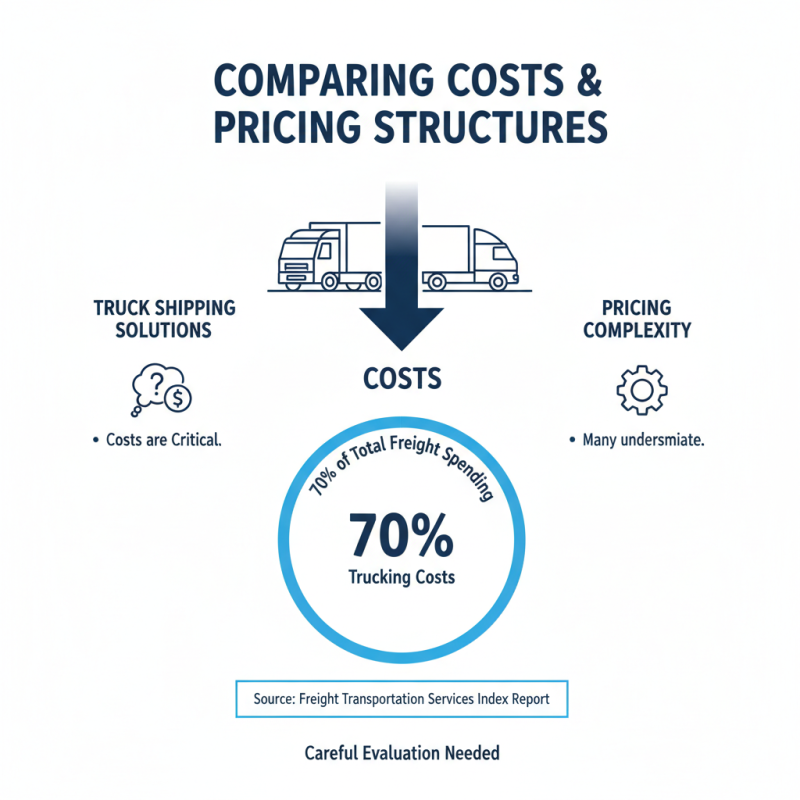
When considering truck shipping solutions, costs play a critical role. Many businesses underestimate the complexity involved in pricing structures. According to a Freight Transportation Services Index report, trucking costs represent about 70% of total freight spending. This stark figure highlights the need for careful evaluation.
Different carriers offer varied pricing models, from flat rates to variable pricing based on distance and weight. Companies often find themselves lost in this maze. For instance, a medium-sized shipment may cost $1.50 per mile, while a larger load could bring the rate down to $1.20. It’s essential to compare these rates and understand how surcharges can add up.
Transparency in pricing is another key factor. Many businesses struggle with hidden fees that are not apparent at first glance. Research indicates that nearly 25% of shippers encounter unexpected charges. Businesses need to demand clarity about these fees to manage budgets effectively. Making a choice without this insight can lead to overspending and revenue losses. Careful scrutiny of pricing structures is crucial for sustainable logistics.
Assessing Carrier Reliability and Reputation
When choosing a truck shipping solution, reliability is crucial. A carrier’s reputation speaks volumes. Research their history with
delays, damages, and
customer service. A reliable carrier minimizes risks for your business.
Tips: Look for online reviews and ratings. Check how carriers handle complaints. Speak with current or former clients to gauge their experiences.
Frequent communication is also essential. Carriers should provide updates during transit. This keeps you informed and reassured.
Pay attention to how quickly they respond to inquiries. Delays in communication may signify bigger issues.
Tips: Create a list of questions before contacting carriers. Ask about their tracking systems and support services.
Compare their answers to evaluate their reliability. Consider their safety records as well. A track record of
safe deliveries is invaluable.
Implementing Tracking and Communication Systems
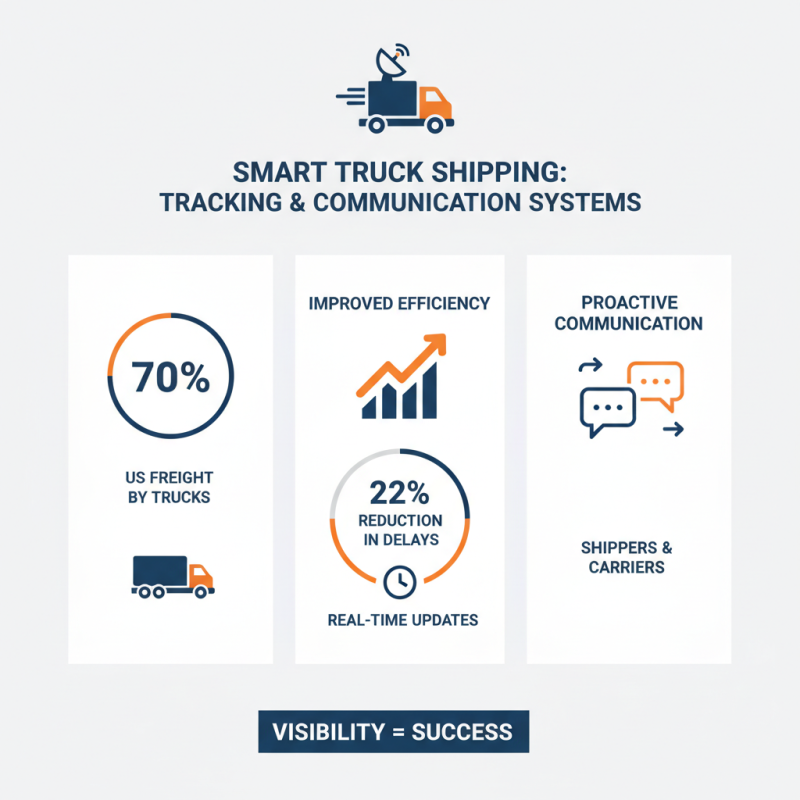
Implementing tracking and communication systems is crucial for effective truck shipping solutions. With nearly 70% of freight in the U.S. transported by trucks, visibility in logistics is essential. Companies that utilize tracking technologies report improved delivery efficiency, with 22% reduction in delays. This can be attributed to real-time updates and proactive communication between shippers and carriers.
Investing in robust tracking systems can provide historical data analytics. Notably, firms leveraging such systems noted a 15% increase in customer satisfaction. This metric demonstrates how improved communication can lead to stronger client relationships. However, challenges remain. Not all companies fully utilize tracking technologies. Many still rely on outdated communication methods, leading to potential misunderstandings.
Choosing the right systems is not just a technical decision; it affects overall business performance. A report by the Council of Supply Chain Management Professionals shows that businesses with high communication capabilities achieved a 27% lower freight cost. Yet many businesses struggle to integrate these systems seamlessly. Reflection is needed on how to adapt these technologies to actual workflows, ensuring their full potential is realized.