2026 Best Freight Carrier Tracking Solutions for Efficient Shipping
In the dynamic world of logistics, efficient shipping hinges on reliable freight carrier tracking. According to a report by Allied Market Research, the global freight tracking market is projected to reach $45 billion by 2027. This growth signifies the increasing reliance on technology for transparency and efficiency in supply chains. Many companies still struggle to implement effective tracking solutions, leading to delays and increased costs.
With 70% of businesses citing shipping delays as a critical issue, the need for robust freight carrier tracking tools has never been more urgent. Real-time tracking can significantly enhance operational efficiency. However, some providers fall short of expectations, which can create frustration for shippers. A lack of streamlined communication often leads to information gaps, impacting delivery times and customer satisfaction.
Investing in advanced tracking systems is essential, but challenges remain. Small to mid-sized businesses may find it difficult to adopt these technologies. As the industry evolves, focusing on seamless integration and user-friendly interfaces is crucial. The journey toward improved freight carrier tracking is ongoing, and companies must continuously assess and refine their strategies to stay competitive.

Overview of Freight Carrier Tracking Solutions for 2026
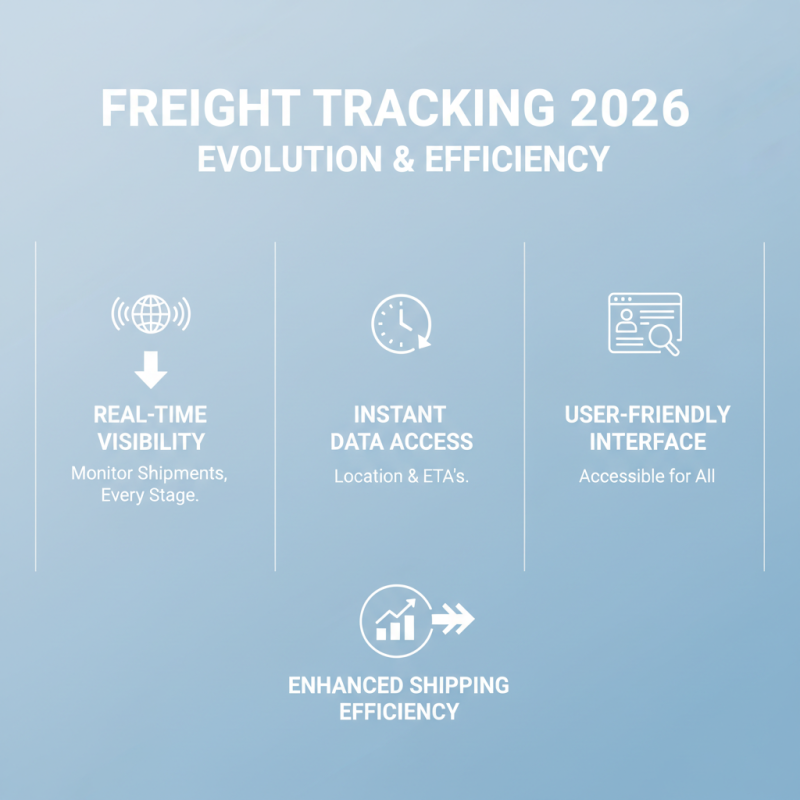
In 2026, freight carrier tracking solutions have evolved significantly. These innovations aim to enhance shipping efficiency and visibility. Real-time tracking has become crucial. It allows companies to monitor shipments at every stage. Users can access data on location and estimated delivery times instantly. Many solutions now feature user-friendly interfaces, making them accessible to all.
However, challenges remain. Not all systems integrate smoothly with existing operations. Some users report gaps in data accuracy. Delays in updates can lead to confusion. Moreover, smaller carriers may struggle with technology adoption. These issues highlight the need for continuous improvement in tracking solutions.
Flexibility is essential. Businesses must choose solutions that adapt to their specific needs. Customization can lead to better support for logistics operations. It is vital to assess the usability of these systems. Users often appreciate straightforward interfaces, but they may need more training. Balancing advanced features with user-friendliness is key for ongoing success in freight tracking.
Key Features to Look for in Tracking Software
Choosing the right freight carrier tracking solution is vital for efficient shipping. Real-time visibility is a key feature. According to a recent report by Gartner, over 70% of companies prioritize tracking technology. When your shipments can be monitored in real time, issues can be addressed quickly. Delays can be reduced, leading to enhanced customer satisfaction.
Custom alerts are another important aspect. Tracking software should notify users of any changes. If a shipment is delayed, stakeholders should receive prompts immediately. The latest statistics indicate that companies with customized alerts experience 30% fewer customer complaints. Additionally, the ability to integrate with existing systems is critical. Compatibility ensures that the tracking software works seamlessly with your current logistics platform.
However, not all solutions meet these needs. Some lack user-friendly interfaces, which complicates the tracking process. Training employees to navigate complex software can be time-consuming. Reports suggest that 40% of companies struggle with user adoption due to software complexity. This highlights the need to assess usability as a crucial feature when selecting tracking software. Ignoring this can lead to inefficiencies and wasted resources in managing shipments.
Top Freight Carrier Tracking Solutions for Different Business Needs
Freight carrier tracking is crucial for efficient shipping. Different businesses have unique needs. Some prioritize real-time tracking, while others need cost-effective solutions. Companies vary in size, shipment volume, and technology use. Selecting the best solution requires careful consideration.
For small businesses, affordability is key. Simple tracking systems might suffice. They can provide essential updates without overwhelming features. Larger organizations may demand advanced systems with integrated logistics tools. They need detailed analytics and custom alerts. Still, complexity can lead to confusion. Choosing the right system should balance functionality and usability.
Sometimes, businesses struggle with integration issues. New tracking tools might not fit seamlessly into existing workflows. Employees may resist changes, adding frustration. A thorough needs assessment can identify gaps. Engagement with staff can ease transitions. The right solution should enhance operations, not complicate them.
2026 Best Freight Carrier Tracking Solutions for Efficient Shipping
| Solution Type |
Key Features |
Integration Options |
User Ratings |
Pricing |
| Real-Time Tracking |
GPS Tracking, Automated Alerts |
API, EDI |
4.8/5 |
$50/month |
| Data Analytics |
Predictive Analytics, Reporting Tools |
CSV, XML |
4.5/5 |
$75/month |
| Inventory Management |
Stock Alerts, Order Tracking |
Mobile App, Web Portal |
4.6/5 |
$80/month |
| Shipment Automation |
Automated Scheduling, Invoice Processing |
ERP Systems, Cloud Storage |
4.7/5 |
$100/month |
| Customer Support |
24/7 Helpdesk, Chat Support |
Web Integration, Ticketing Systems |
4.9/5 |
$60/month |
Comparative Analysis of Leading Tracking Solutions in 2026
In the dynamic world of freight shipping, tracking solutions are essential. They provide visibility and control over shipments. Efficient tracking helps reduce delays and improve customer satisfaction. Many businesses are exploring different solutions to meet their needs.
Leading tracking solutions in 2026 offer various features. Some emphasize real-time updates, while others provide advanced analytics. Businesses must assess which features align with their operations. They should consider user interface and customer support. Not all solutions suit every company. Many will struggle to find the perfect fit.
However, not every solution is flawless. Some users report issues with integration. Others find analytics overwhelming. Balancing functionality with usability is crucial. Continuous testing and feedback can guide improvements. As technology advances, so do expectations. The quest for the ideal tracking solution is ongoing.
2026 Freight Carrier Tracking Solutions Efficiency Comparison
Future Trends in Freight Carrier Tracking Technology
The future of freight carrier tracking technology is evolving rapidly. According to a recent industry report, 70% of logistics companies believe real-time tracking will enhance efficiency. Companies are now investing heavily in IoT devices and AI algorithms. These advancements pave the way for smarter logistics.
GPS and RFID technologies are transforming supply chain management. They enable precise tracking of shipments. However, challenges remain. Connectivity issues can disrupt data flow, leading to confusion. Without proper integration, tracking systems can become ineffective, resulting in delays. A survey found that 30% of logistics businesses struggle with data synchronization across platforms.
Additionally, the rise of autonomous vehicles presents new tracking complexities. While automation promises efficiency, it requires robust tracking systems. Cybersecurity threats also loom large. Companies must ensure that their tracking systems are secure to protect sensitive information. Data from global reports indicate cyber attacks on logistics firms have increased by 25% in recent years. Balancing innovation with security will be crucial for the industry's future.